Tamil Nadu
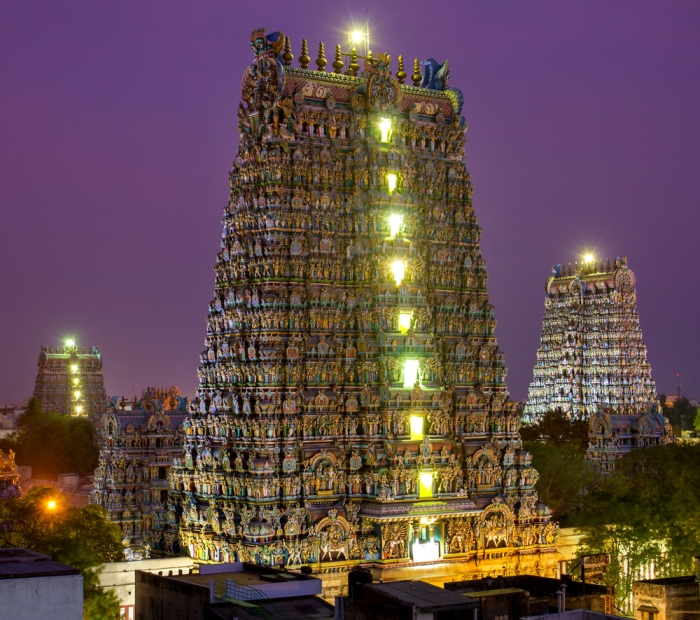
is known for its beautiful and celestial ancient temples especially on the
southern bank of the River Vaigai. The city of Madurai is famous for Sri
Meenakshi Amman Temple that is also known by the names of Meenakshi
Sundareswarar Temple or Tiru-Aalavaai or Meenakshi Amman kovi. Its astonishing
architecture is all over famous in the World. Devi Meenakshi was the
personification of Goddess Parvati and Sundareshwarar was an embodiment of Lord
Shiva. Therefore, this temple is dedicated to Parvati and Shiva. There is a lot
of myth associated with the temple. It is important to know more about these
myths.
According to
the mythology, Deity Meenakshi was born out of holy fire as an answer to the
prayers of King Malayadwaja and his wife Kanchanamalai. Devi Meenakshi married
to Lord Shiva and both ruled the city of Madurai. It is believed that Lord
Indra founded the temple when he found a suyambu lingam. It is also said that
Lord Vishnu, Meenakshi travelled all the way from Srivaikuntam- his abode to
witness the marriage. But he could not make it on time and the marriage was
happened without his presence. Lord Vishnu got angry and he vowed never to
enter Madurai and settled in nearby Azaghar Kovil. He was later convinced and
to his day, his pacification is celebrated as Azhaghar Thiruvila.
Sundareswarar
is an embodiment of Lord Shiva and his fish eyed spouse Meenakshi who are
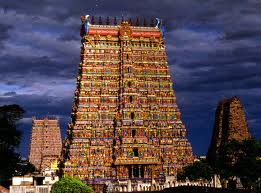
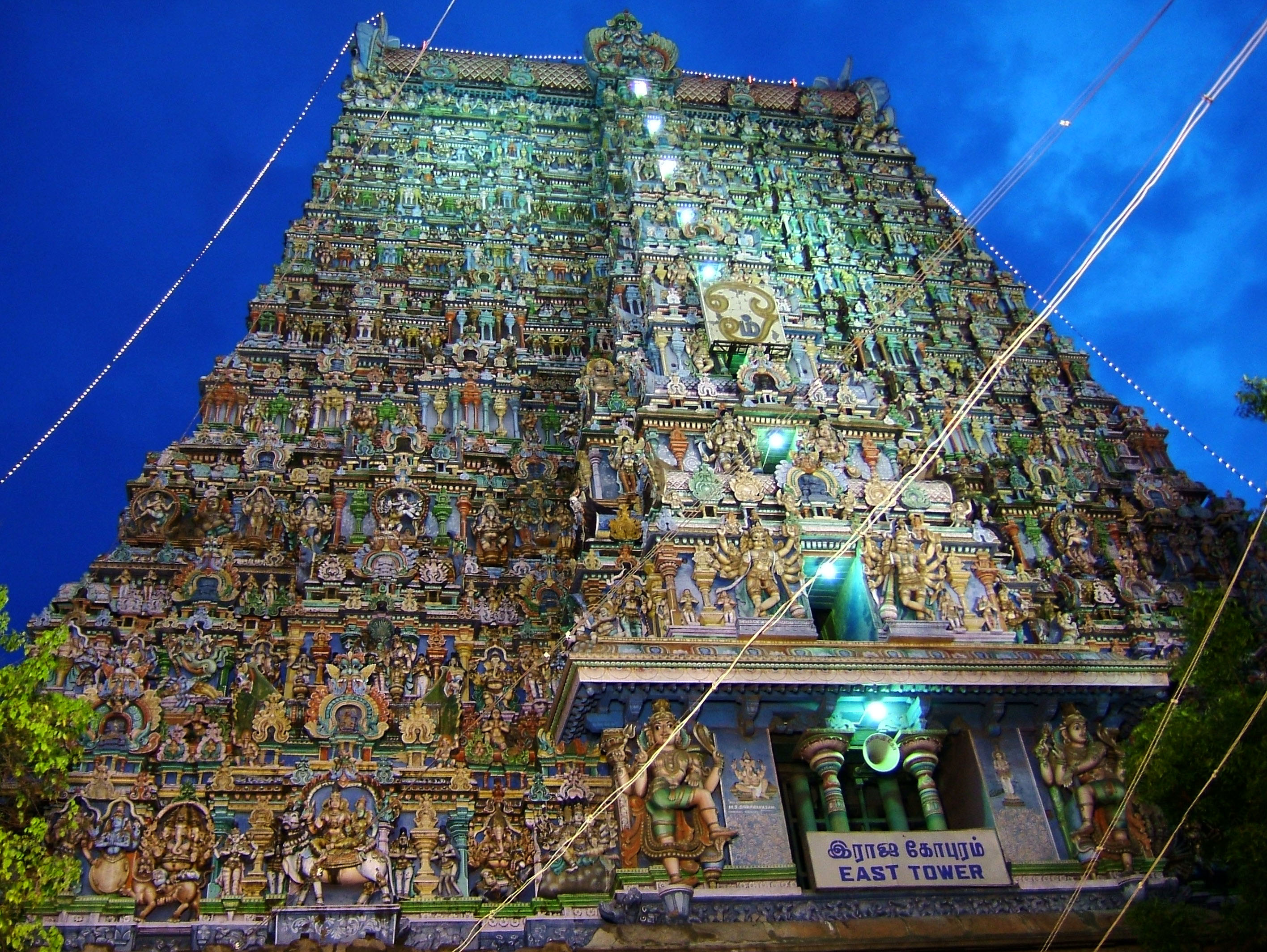
enshrined in two temples. Enclosing these two shrines are the four huge
gateways. These make uniqueness to the temple as these four entrances are
pointed towards the four directions. The city of Madurai was also redesigned as
per the rules of architecture and constructed in a square shape with its
concentric streets finishing at the temple. It is said that the temple was
plundered in the 14th century by the Muslim raider Malik Kafur who
looted the temple of its valuables. Restoration was undertaken by the Nayak
ruler by Vishwanatha Nayakar around the 16th century. Vishwanatha
Nayak rebuilt the temple in accordance to Shilpa Shastra.
The temple structure with its concentric
squares and high walled enclosures is the centre of attraction. The entire
temple occupies around 45 acres, with each side having an entrance of its own.
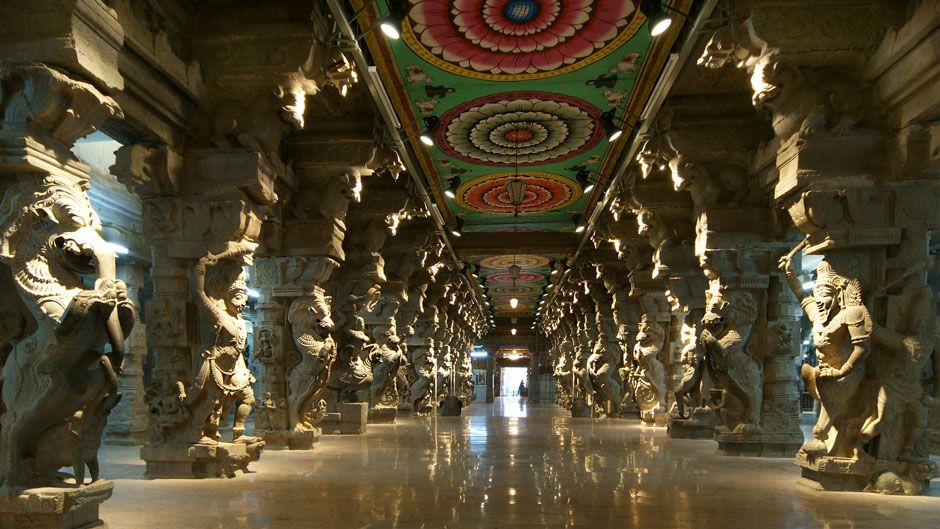
The many mandapams or pavilions are one of the many attractions of this temple.
Prominent among them are the Aaiyiram Kaal Mandapam, Ashtashakti Mandapam,
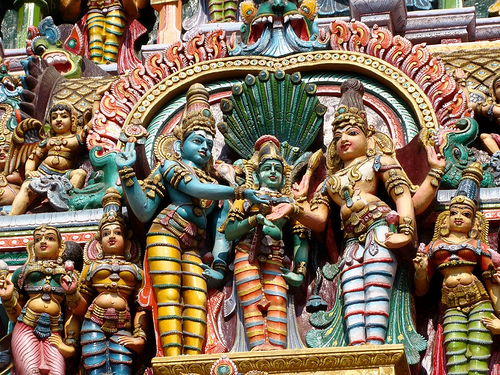
Meenakshi Nayakan Mandapam, and Killi Kootu Mandapam. The eye-catching yimanas
over the shrine of the two deities are another sight to be captured, each with
their own set of intricate carvings depicting humans, animals, demons and gods,
both being coated with gold.
Some of these pillars are also called Musical Pillars, which when struck, produce notes of Carnatic music. This was built in 1569 by Arivanatha Mudaliar, with perfect and artistic vision. Each pillar here is intricately carved with figures of Shiva, Karthekeva, Ganesha and Rati (wife of Kama). You can also visit the in-house museum here to dwell deeper into its 1200 year old history.